
Decision guide · 7 min read
Should You Repair or Replace Your Concrete Steps, Walkway, or Driveway?
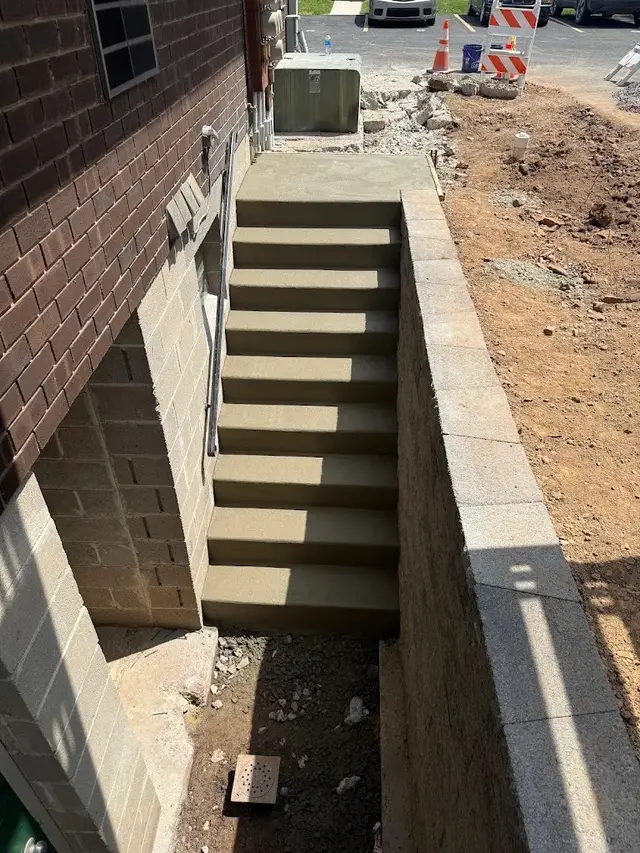
Almost every call we take about old concrete starts with the same question: can this be fixed, or does it need to come out? The answer depends on what is failing and why. Surface damage on a sound slab can often be repaired. Damage caused by the base or footing underneath usually cannot, and money spent patching it is money spent twice.
Here is how we evaluate steps, walkways, and driveways on an estimate, so you know what to look for before we arrive.
Damage that can usually be repaired
The test for all of these is simple: is the concrete underneath still sound and in the right place? If yes, a repair will hold.
- Hairline cracks (narrower than a credit card) on a slab that is still level. Sealing them keeps water out.
- Chipped or broken edges on steps and slab edges, where the rest of the piece is solid.
- Shallow surface spalling or scaling from deicing salt, limited to small areas.
- One settled section of walk or driveway that is otherwise intact and can be lifted or replaced on its own.
- Worn or slick surfaces that can be resurfaced or re-textured.
Damage that means replacement
In these cases the problem is beneath the surface. Replacement lets us correct the base, set the right slope, and pour concrete designed for Pennsylvania winters, which is why the new work lasts and the patch would not.
- Heaving: sections lifted by frost or tree roots. The base has moved and will keep moving.
- Settling that changes the slope: a driveway that now drains toward the garage, or a walk that puddles. Water is getting under the slab.
- Wide, stepped, or multiple cracks across most panels. The slab has broken into pieces that move independently.
- Steps separating from the house or leaning. The footing has failed; no surface patch will fix it.
- Widespread scaling exposing aggregate across large areas, usually from non-air-entrained concrete and years of salt.
- Crumbling that goes deeper than the surface.
Concrete steps: special considerations
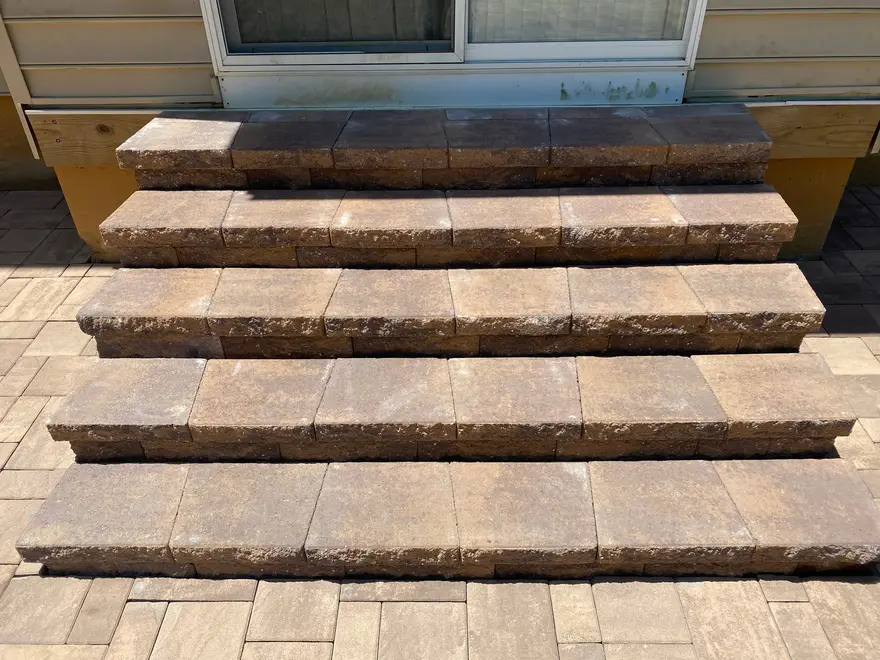
Steps are a safety item and the first thing a visitor or a home inspector notices. Uneven rises, a loose railing, or a cracked tread are trip hazards. Chipped nosings and surface damage on solid steps can be repaired. Steps that have settled, rotated, or pulled away from the house should be rebuilt on a proper footing with consistent rises and a landing sized for the door, with railing anchors set in the pour.
Walkways and sidewalks
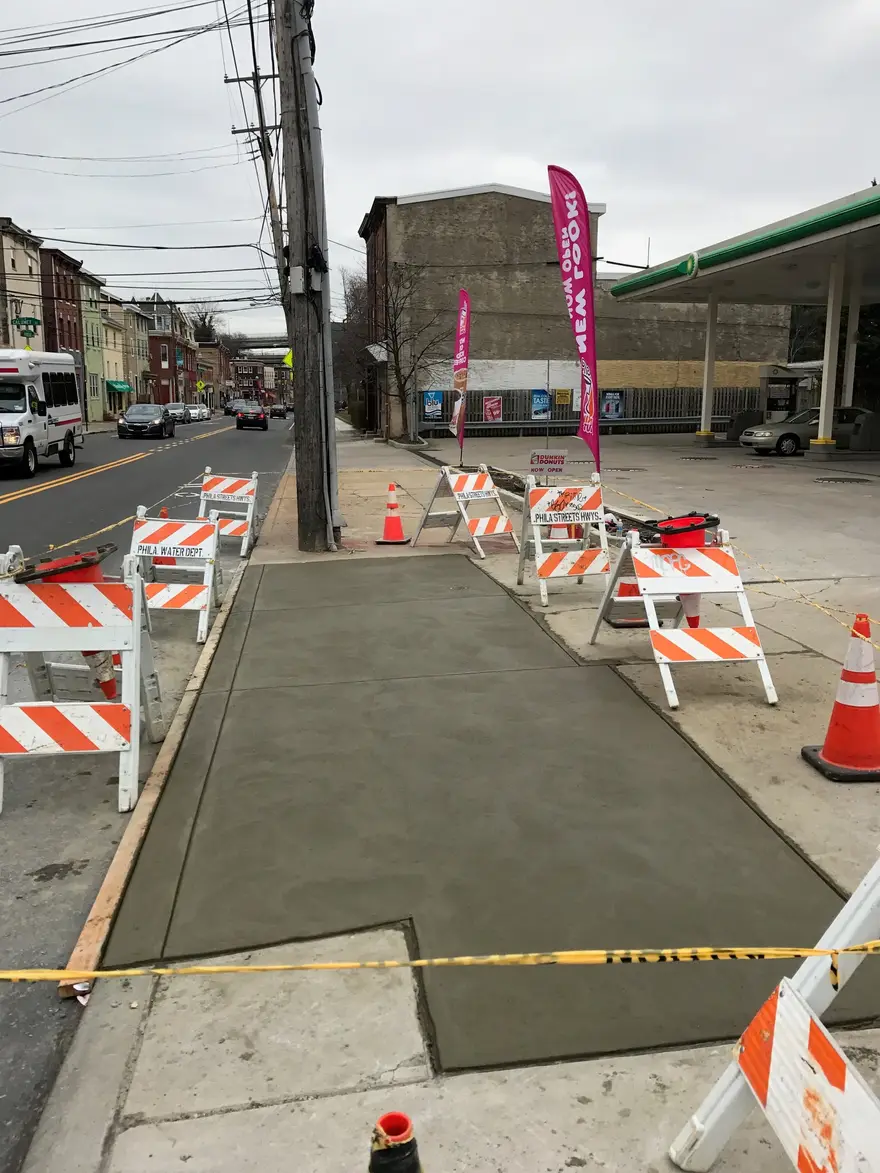
Most walkway damage is a few panels lifted by roots or settled near a downspout. Replacing just those panels to the nearest joint is standard practice. In boroughs like Hatboro and Doylestown, property owners are commonly responsible for the public sidewalk in front of their home, and a notice from the borough usually lists the specific flags that must be replaced. We handle the permit and match the new sections to the old as closely as possible.
If the whole walk is narrow, cracked, and uneven, full replacement is the chance to widen it, improve the slope, and add a finish that fits the house. See our sidewalks and walkways page.
Driveways
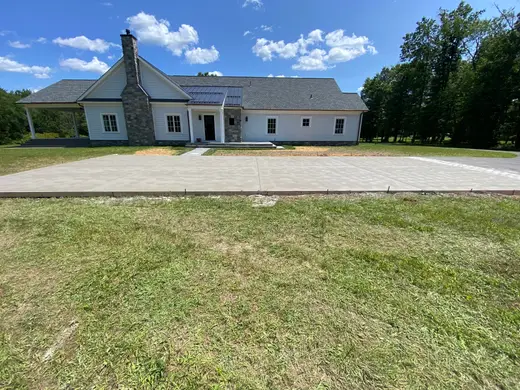
A driveway is the biggest investment of the three, so the repair-versus-replace math matters most here. Replace individual panels if damage is confined to one or two sections. Replace the whole driveway if cracks run through most of it, sections sit at different heights, water pools toward the garage, or the surface is scaling broadly. Our driveway replacement cost guide covers what each option costs; the concrete driveways page covers how we build them.
What about concrete leveling (mudjacking or foam)?
Leveling lifts a settled slab by pumping material underneath it. It can be a good fix for a single sunken panel that is otherwise sound, and it costs less than replacement. It does not fix cracking, scaling, or a slab that has broken into pieces, and it does not address why the base settled in the first place. We will tell you honestly if leveling is the right call for your situation or if it is just postponing a replacement.
The cost logic: repair now vs. replace once
Repairs on sound concrete are inexpensive and worth doing. Repairs on concrete that is already heaving or breaking up tend to be repeated every year or two until replacement happens anyway. If your concrete is forty years old, cracked throughout, and no longer draining properly, the lowest total cost is almost always a single replacement with a correct base. If it is twenty years old with one bad panel, fix the panel.
Getting a straight answer
Send us photos of the damage and tell us how old the concrete is and whether the problem is getting worse. Chris will come out, check the slab and the base where he can, and tell you which option makes sense, including when the answer is "leave it alone for now." Estimates are free. See our concrete repair and replacement and concrete steps pages for more.
FAQ
Common questions
Can cracked concrete steps be repaired?
If the steps are solid and level and the damage is chipped nosings, small cracks, or surface spalling, yes. If the steps have settled, tilted, or pulled away from the house, the footing has failed and they should be rebuilt.
How do I know if my driveway needs to be replaced?
Look for cracks through most panels, sections at different heights, water pooling toward the garage, and widespread scaling. Any of those indicates the base has failed. One or two cracked panels on an otherwise level driveway can be replaced individually.
Is it cheaper to repair or replace a concrete walkway?
Replacing only the damaged panels is usually the most economical fix. Full replacement makes sense when most panels are damaged, the walk is too narrow, or the slope is wrong.
Does concrete leveling last?
For a single settled slab that is otherwise sound, leveling can last for years. It does not fix cracks or scaling and does not correct a poor base, so it is not a substitute for replacement on concrete that is breaking up.
Who is responsible for the sidewalk in front of my house?
In most Bucks and Montgomery County boroughs and townships, the property owner is responsible for maintaining and replacing the public sidewalk along their frontage, and sidewalk work needs a municipal permit. We confirm the local rule and handle the permit.
Related guides
Keep reading
Concrete Driveway Replacement Cost in Pennsylvania: What to Budget in 2026
Removal, base, new concrete, and the aprons and permits that add to a driveway quote, with 2026 ranges and a repair-or-replace checklist.
Read the guide →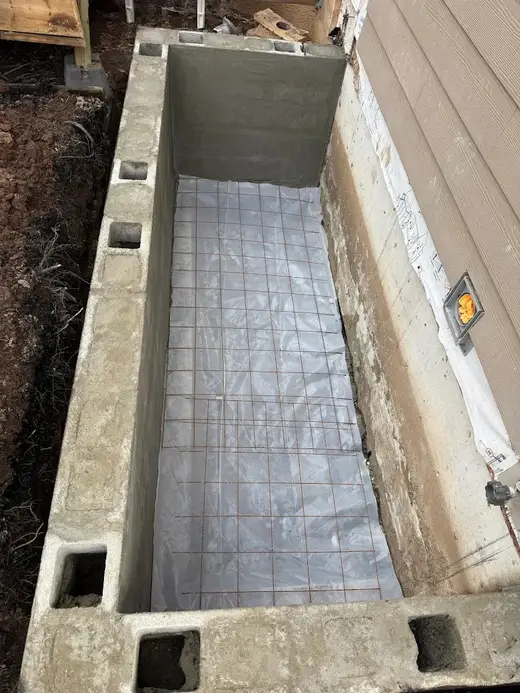
Concrete Patio Installation: What to Expect From Estimate to Finished Slab
Day by day: estimate, prep, base, forms, reinforcement, pour day, finishing, curing, and how to take care of the new slab.
Read the guide →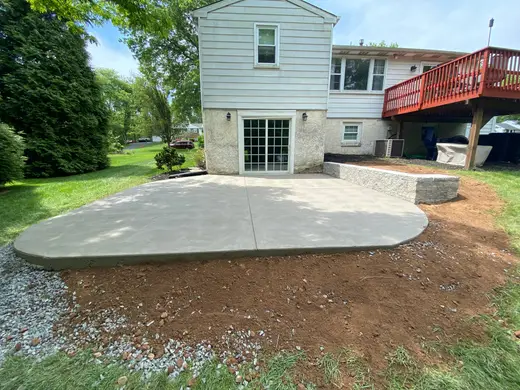
How Much Does a Concrete Patio Cost in Bucks County, PA? (2026 Guide)
Per-square-foot ranges for plain and stamped patios, the six factors that move the price, and what to have ready for an accurate estimate.
Read the guide →Start here
Not sure if it can be repaired? Get a free opinion.
Send Chris a few photos. He will come out, check the slab and the base, and tell you whether a repair will hold or replacement is the smarter spend.