
Cost guide · 8 min read
Concrete Driveway Replacement Cost in Pennsylvania: What to Budget in 2026
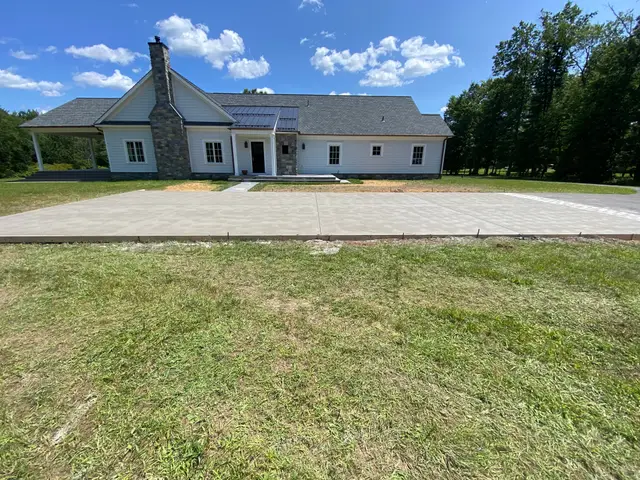
A concrete driveway is one of the biggest flatwork projects most homeowners will ever pay for, and in Pennsylvania the number depends heavily on what is already there. Replacing a cracked, heaved forty-year-old driveway means demolition, hauling, base correction, and a new pour, not just the new slab.
This guide breaks the cost into its parts using 2026 figures from national cost guides, explains what pushes a Bucks or Montgomery County driveway toward the high end, and helps you decide whether you actually need a full replacement.
What goes into a driveway replacement price
Think of replacement as four line items. Here is roughly how they break down using 2026 national ranges:
| Component | Typical range | Notes |
|---|---|---|
| Removal and haul-off of old concrete | $1 – $4 per sq ft | Thicker slabs, rebar, and tight access cost more; short driveways near the street cost less |
| Base correction | Included to $2+ per sq ft | Re-grading and compacting new crushed stone where the old base failed or soil is soft |
| New concrete, broom finish | $6 – $12 per sq ft | 4" to 5" reinforced slab, broom texture, control joints, apron |
| Decorative upgrades | +$4 – $10 per sq ft | Stamped or colored sections, exposed aggregate, borders |
Worked example: a 20 × 35 (700 sq ft) two-car driveway with removal at $2 per square foot and new broom-finished concrete at $9 per square foot is roughly $7,700 before any decorative work, apron reconstruction, or township permit fees.
What makes a Pennsylvania driveway cost more or less
Length and slope
Longer driveways cost more in total but less per square foot. Steep driveways need more careful forming and finishing and sometimes a thicker slab at the bottom where water and vehicle loads concentrate.
The apron and curb
Where your driveway meets the street is in the public right-of-way. In most Bucks and Montgomery County municipalities that section needs a permit and an inspection, and some require a specific thickness or a depressed curb. We confirm the local rule and handle the paperwork.
Freeze-thaw design
Pennsylvania winters are hard on driveways. Air-entrained concrete, a properly compacted stone base, and correct joint spacing are what keep a new driveway from scaling and heaving. These are standard on our jobs; make sure any quote you compare includes them.
Thickness and reinforcement
Four inches is the usual minimum for cars. If you park a work truck, trailer, or RV, a five- or six-inch slab with rebar in the parking area is money well spent and adds modestly to the per-square-foot cost.
Widening and side pads
If you are already replacing the driveway, adding width or a side parking pad costs only the incremental concrete and forming. Coming back later to add it as a separate job costs considerably more.
Concrete vs. asphalt driveway cost in Pennsylvania
Asphalt usually has a lower upfront cost per square foot than concrete. Concrete typically lasts longer, needs less routine maintenance (no sealcoating every few years), stays cooler in summer, and gives you decorative options asphalt cannot. Over a thirty-year span the lifetime costs are closer than the day-one prices suggest. If curb appeal and longevity matter, concrete is usually the better value; if the lowest initial price is the priority, asphalt may win.
Do you actually need to replace the whole driveway?
Not always. Here is how we think about it on the estimate:
- Replace the damaged panels only if one or two sections are cracked or settled and the rest of the driveway is level, sound, and draining properly.
- Replace the whole driveway if cracks run through most panels, sections have heaved at different heights, water pools toward the garage, or the surface is scaling across large areas. At that point the base has failed and patching will not hold.
- Consider leveling or repair for a settled section that is otherwise intact. We will tell you honestly if that will last.
Our full guide to deciding between repair and replacement covers steps and walkways too: Repair or replace your concrete steps, walkway, or driveway?
How long a driveway replacement takes
Most residential driveway replacements are two to four days of on-site work: one day for demolition and hauling, one for base prep and forming, one for the pour and finish, plus any apron or curb work. You can walk on the new driveway the next day, but plan to keep cars off it for about seven days while the concrete gains strength. Read more about the service on our concrete driveways page.
Getting an accurate driveway estimate
Have these ready when you call or fill out the form:
- Approximate length and width (or just the number of cars it holds)
- Photos of the worst cracks, any heaved sections, and the apron at the street
- Where water pools after rain
- Whether you park anything heavier than a car
- Whether you want it wider or want a side pad
Estimates are free. Chris measures the driveway, checks the base where he can, and gives you a written price for the right scope, whether that is two panels or the whole thing.
Pricing references
Cost ranges in this guide are drawn from the national cost surveys below and are provided for planning only. Your price depends on your site, scope, and finish; estimates from First Class Concrete LLC are free.
FAQ
Common questions
How much does it cost to replace a two-car concrete driveway in Pennsylvania?
Using 2026 national ranges, a 600 to 700 square foot two-car driveway with removal and a new broom-finished slab typically runs from the mid four figures to around $10,000. Stamped or colored sections, a long run to the street, or apron and curb work push it higher. An on-site estimate is the only way to know your number.
How thick should a concrete driveway be?
Four inches of reinforced concrete over a compacted stone base is the standard for passenger cars. Five to six inches with rebar is recommended where trucks, trailers, or RVs will park.
How long before I can park on a new concrete driveway?
You can walk on it the next day. Keep vehicles off for about seven days, and avoid heavy trucks for about a month while the concrete reaches full strength.
Do I need a permit to replace my driveway?
The portion in the public right-of-way (the apron and curb) typically does. The private portion usually does not, but some municipalities regulate impervious surface. We check your township’s requirements and handle the permit.
Can you just replace the cracked sections?
Yes, if the rest of the driveway is sound. We remove the damaged panels to the nearest joint, correct the base, and pour new sections that match as closely as possible.
Related guides
Keep reading
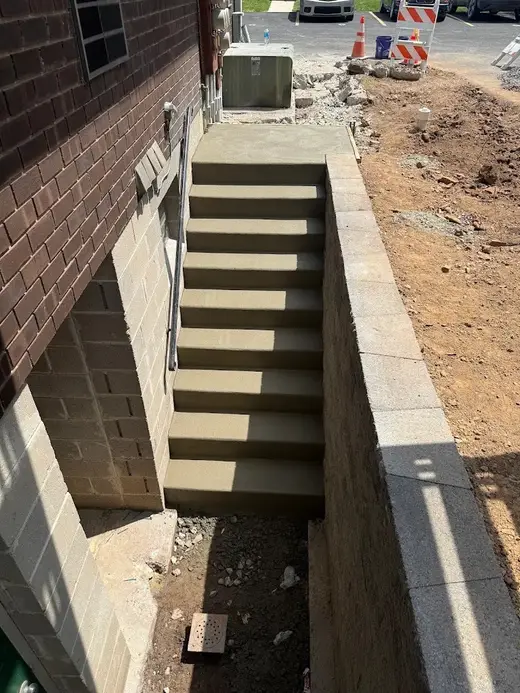
Should You Repair or Replace Your Concrete Steps, Walkway, or Driveway?
A plain-language checklist for cracks, settling, spalling, and separation, and what each one means for steps, walks, and driveways.
Read the guide →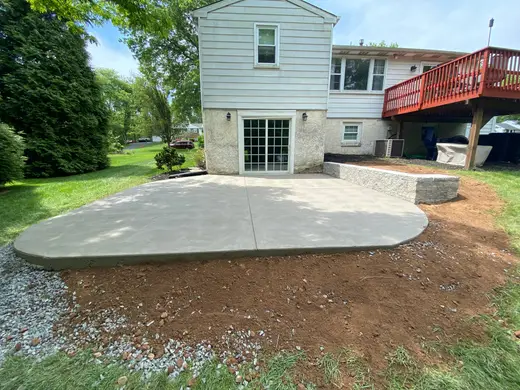
How Much Does a Concrete Patio Cost in Bucks County, PA? (2026 Guide)
Per-square-foot ranges for plain and stamped patios, the six factors that move the price, and what to have ready for an accurate estimate.
Read the guide →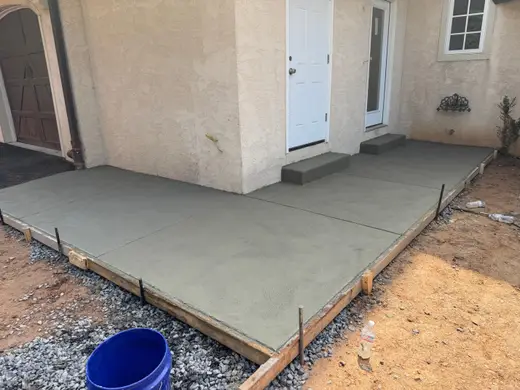
The Best Concrete Patio Finishes for Pennsylvania Homes
Six patio finishes compared on looks, traction, salt and freeze-thaw performance, upkeep, and relative cost, with recommendations by use.
Read the guide →Start here
Get a free driveway estimate
Send a few photos of the driveway and the apron at the street. Chris will come out, check the base, and tell you whether you need a few panels or the whole thing.