
Process · 8 min read
Concrete Patio Installation: What to Expect From Estimate to Finished Slab
A patio pour looks like a one-day job, and the concrete truck part of it is. But the slab you see is the result of several days of work before the truck arrives and a few weeks of curing after. Knowing the sequence helps you plan, ask the right questions, and spot the shortcuts that cause patios to crack and heave.
This is how First Class Concrete installs a residential patio in Bucks and Montgomery County, from the first phone call to the day you set the furniture out.
Step 1: The estimate
Chris comes out, measures the area, looks at access, grade, and drainage, and talks through what you want: size, shape, finish, and anything the patio needs to accommodate. You get a written price with the scope spelled out. Estimates are free. Our Bucks County patio cost guide explains how the number is built.
Step 2: Permits, utilities, and scheduling
Depending on your municipality and the project, a permit may be required, particularly if the patio includes a retaining wall or significantly increases impervious surface. We confirm the rule for your township. Before digging, we call PA One Call (811) to have underground utilities marked. Then we schedule the work around weather; concrete needs a window with temperatures above freezing and no heavy rain on pour day.
Step 3: Layout and excavation
We mark the patio outline, then excavate deep enough for the stone base and the slab, typically eight to ten inches below finished grade. If an old patio, pavers, or a deck is in the way, it comes out first and is hauled away. Soil is graded so the finished patio will slope away from the house, usually about a quarter inch per foot.
Step 4: The stone base
Four inches or more of crushed stone goes in and is compacted in lifts with a plate compactor. This is the single most important step for a Pennsylvania patio. A compacted stone base drains water away from the underside of the slab, so there is no saturated soil to freeze, expand, and heave the concrete. Skipping or thinning the base is the most common cause of cracked, tilted patios.
Step 5: Forms and reinforcement
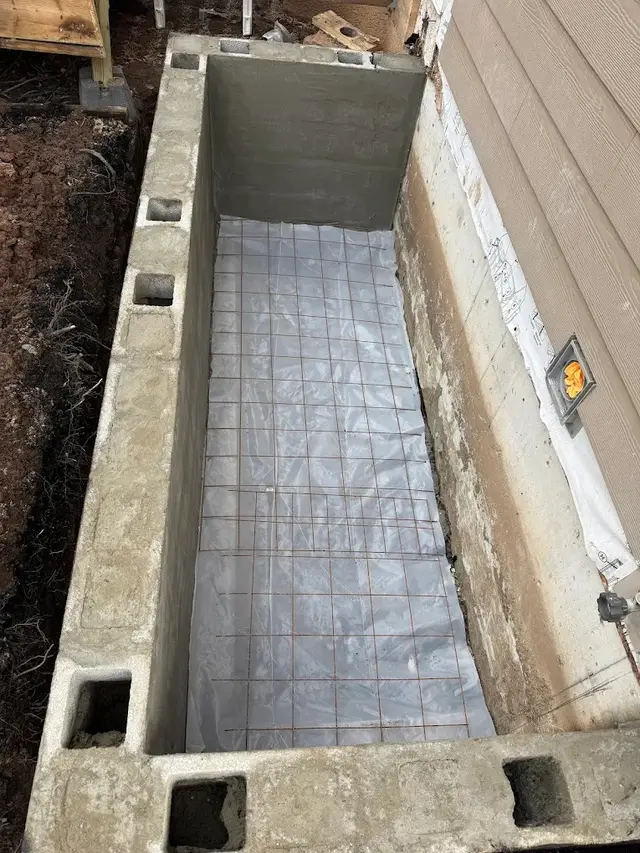
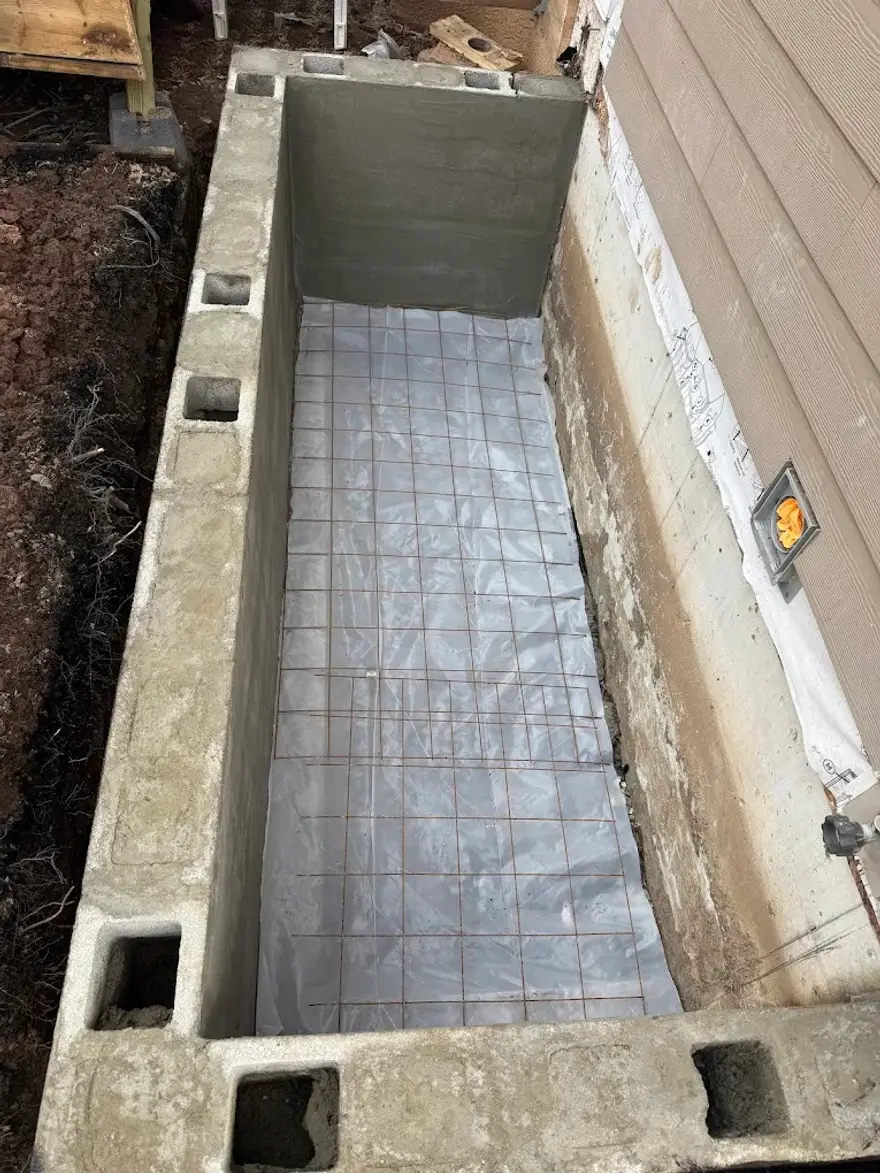
Wood or flexible forms are set to the exact height and slope of the finished patio and staked firmly. Where the patio meets the house, an expansion joint isolates the slab from the foundation. Reinforcement goes in next: welded wire mesh or fiber for a standard patio, rebar where a hot tub or heavy load is planned. The mesh is supported so it sits in the middle of the slab, not on the ground.
Step 6: Pour day
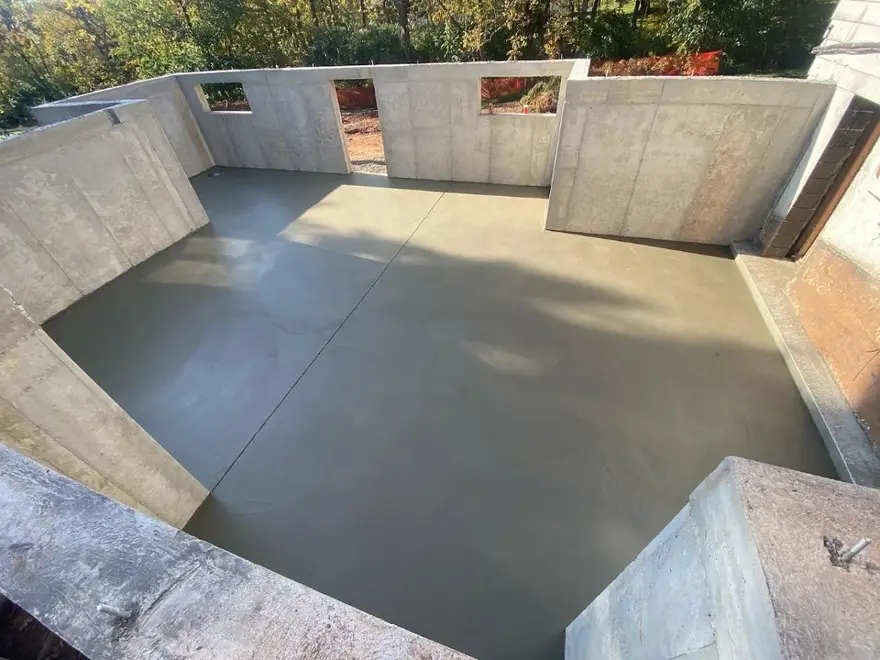
The concrete truck arrives in the morning. If it can reach the forms, concrete goes straight in; if not, we move it by buggy or pump. The crew spreads, screeds, and bull-floats the surface, then waits for the bleed water to disappear before finishing. On a stamped patio, color hardener is broadcast and worked into the surface at this stage.
Timing on pour day is everything. Concrete has a window of an hour or two when it is firm enough to finish but soft enough to texture or stamp. A hot, windy day shortens that window; a cool, humid one stretches it. This is why experienced finishers matter more than anything else on the job.
Step 7: Finishing and joints
The surface is edged and finished: broomed for a standard patio, stamped and detailed for decorative work, or seeded and washed for exposed aggregate. Control joints are tooled in or saw-cut the next day, at spacings sized to the slab thickness, so any shrinkage cracking happens in the joint where it is invisible. Our patio finishes guide describes each option.
Step 8: Curing
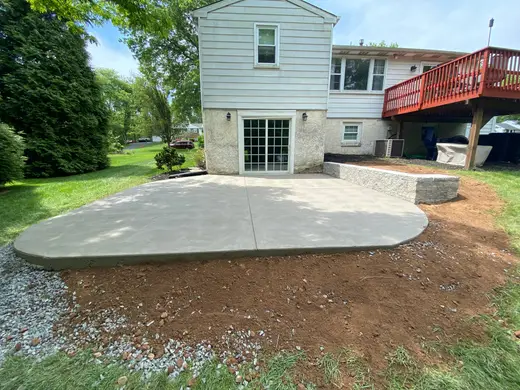
Concrete does not dry; it cures, a chemical reaction that needs moisture and moderate temperatures. We apply a curing compound or keep the slab damp for the first days. Forms come off after a day or two. Here is the usage timeline for a typical patio:
- 24 hours: light foot traffic is fine.
- 3 to 7 days: furniture, grills, and planters can go out; sealer is applied to stamped and colored work once the surface has dried enough.
- 28 days: the concrete has reached its design strength. Hot tubs and very heavy items should wait until then.
Step 9: Cleanup and walkthrough
Forms, stakes, and debris are removed and the surrounding lawn is raked out and backfilled against the slab edges. Chris walks the job with you, explains care and resealing, and answers questions. If anything needs attention after the pour, you call him directly.
Taking care of a new patio
Ready to start? Learn more about our concrete patios or request a free estimate.
- Avoid deicing salts the first winter; use sand for traction instead.
- Reseal stamped and colored concrete every two to three years.
- Keep downspouts discharging away from the slab edges.
- Hairline cracks within control joints are normal and not a defect.
FAQ
Common questions
How long does it take to install a concrete patio?
Typically two to four days of on-site work for a residential patio: excavation and base, forming and reinforcement, and the pour and finish. Stamped work adds a sealing visit a few days later. Weather can extend the schedule.
How long until I can walk on a new concrete patio?
About 24 hours for light foot traffic. Wait roughly a week before setting out furniture and grills, and about 28 days before placing a hot tub or other very heavy load.
Can a concrete patio be poured in the rain or in winter?
Not in heavy rain, and not on frozen ground. Light rain after finishing is usually fine. In cold weather we use accelerators and blankets within limits, but the best patio season in Pennsylvania runs from spring through late fall.
Why does my new patio have lines cut in it?
Those are control joints. Concrete shrinks slightly as it cures, and the joints give it a predetermined place to crack so the surface stays clean. On stamped patios they are usually placed along pattern lines.
Will the crew damage my lawn?
There will be some disturbance along the access path and around the patio edges. We plan the route to minimize it, use plywood where needed, and rake out and backfill when we leave.
Related guides
Keep reading
How Much Does a Concrete Patio Cost in Bucks County, PA? (2026 Guide)
Per-square-foot ranges for plain and stamped patios, the six factors that move the price, and what to have ready for an accurate estimate.
Read the guide →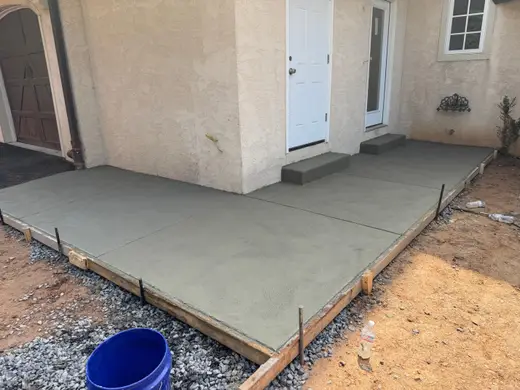
The Best Concrete Patio Finishes for Pennsylvania Homes
Six patio finishes compared on looks, traction, salt and freeze-thaw performance, upkeep, and relative cost, with recommendations by use.
Read the guide →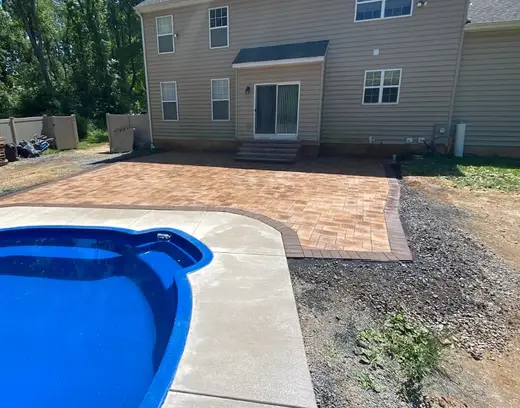
Stamped Concrete vs. Pavers: Which Is Better for a Pennsylvania Patio?
A side-by-side on cost, durability, maintenance, repairs, and looks, plus when it makes sense to use both on the same project.
Read the guide →Start here
Get a free patio estimate
Tell Chris what you have in mind and how to reach the yard. He will come out, measure, and give you a written price and a realistic schedule.