
Comparison · 7 min read
Stamped Concrete vs. Pavers: Which Is Better for a Pennsylvania Patio?
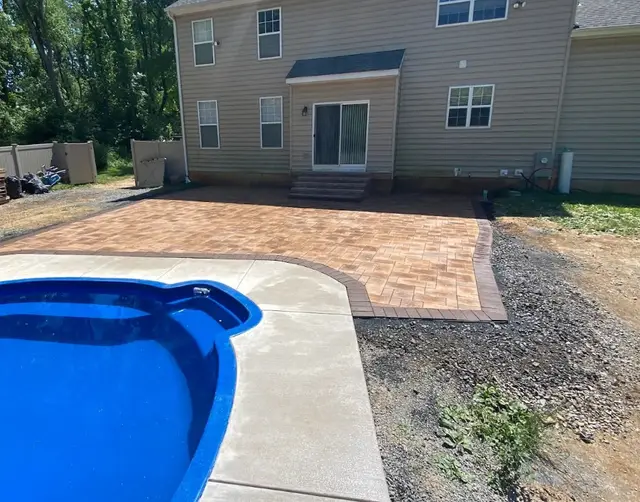
Stamped concrete and interlocking pavers can produce patios that look similar from the back door, which is why so many homeowners end up comparing them. Under the surface they are very different products, and in a climate with real winters those differences matter.
We install stamped and decorative concrete, and we routinely pour concrete that ties into existing or new paver work, so we see how both perform over time in Bucks and Montgomery County yards. Here is the comparison we give customers on estimates.
Stamped concrete vs. pavers at a glance
| Stamped concrete | Pavers | |
|---|---|---|
| Installed cost (2026 national ranges) | $12 – $18 per sq ft typical | $15 – $25+ per sq ft typical, depending on paver |
| Structure | One continuous reinforced slab | Individual units on sand over compacted stone |
| Joints | Control joints only, usually hidden in the pattern | Hundreds of sand joints |
| Freeze-thaw behavior | Can hairline-crack; stays in one plane | Individual units can heave or settle |
| Weeds and ants | Rare | Common in joints without polymeric sand and upkeep |
| Maintenance | Reseal every 2–3 years | Re-sand joints, treat weeds, occasional re-leveling |
| Spot repair | Harder; patches are visible | Easy; lift and reset units |
| Design options | Any pattern, color, border; seamless textures | Fixed shapes and colors from the manufacturer |
| Install time | 2–4 days plus curing | 3–5 days for a comparable patio |
Cost: stamped concrete is usually the lower number
National cost guides put stamped concrete in the $12 to $18 per square foot range for a single pattern and color, and most paver patios in the mid-teens to mid-twenties per square foot depending on the paver line and pattern. Premium pavers and complex layouts go higher. The gap narrows for very small areas, where the fixed costs of a concrete pour weigh more heavily, and widens on large patios.
For a fuller breakdown of what a patio costs in this area, see our Bucks County concrete patio cost guide.
Durability in a Pennsylvania winter
Both products are durable when installed correctly. The difference is how they fail. Concrete is one slab: if the base is compacted and the joints are placed properly, it stays flat, and the worst case is a hairline crack that a sealer will largely hide. Pavers move individually: frost can lift a few units or let a section settle, especially near downspouts or where the edge restraint fails, and that becomes a trip edge and a place for water to collect.
Deicing salt is hard on both. Air-entrained concrete and a good sealer protect stamped work; sealed pavers hold up similarly. Avoid deicers with magnesium or calcium chloride on new concrete for the first winter regardless.
Maintenance: resealing vs. re-sanding
- Stamped concrete: sweep and rinse as needed; reseal every two to three years to protect color and surface. Resealing is a few hours of work for a typical patio.
- Pavers: sweep and rinse; refill joints with polymeric sand every few years; treat weeds and ants; re-level any settled units. Pavers never need a surface sealer, though many owners apply one to deepen the color.
Repairs: where pavers win
If a utility has to be dug up under a paver patio, you lift the units, do the work, and reset them. With stamped concrete the patch will be visible even with careful color matching. If you expect future digging under the patio, that is a real point in pavers’ favor. For most backyard patios it never comes up.
Appearance and design flexibility
Stamped concrete can imitate slate, flagstone, wood plank, cobblestone, or brick, in any color, with seamless textured fields and custom borders. Because it is one pour, curves and integrated steps or seat walls are straightforward. Pavers give you a crisp, modular look with the texture of real units, but you are limited to the shapes and colors the manufacturer makes. Both look good. Which looks better is a matter of taste and the style of the house.
When using both makes sense
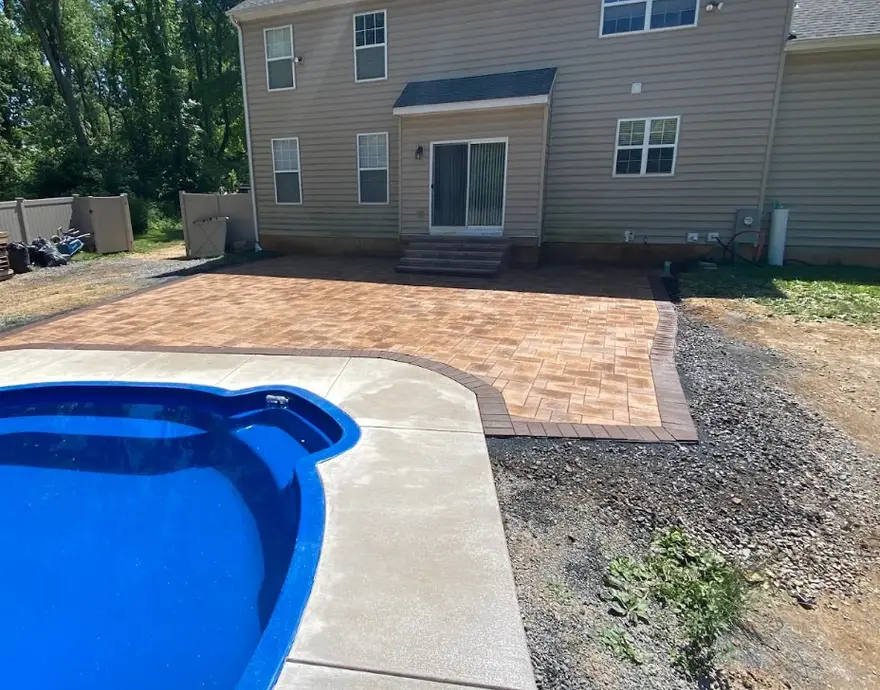
Around a pool, a broom-finished concrete surround gives the traction and drainage a pool deck needs, and a stamped or paver patio behind it provides the living space. Along a house, a concrete walkway with a paver or stamped border adds detail without the joint maintenance of a full paver walk. We regularly pour concrete that meets paver work cleanly; the photo at the top of this guide is one example of a concrete pool deck tied into a paver patio and border.
Our recommendation
For most Bucks and Montgomery County patios, stamped or decorative concrete gives you the look you want at a lower cost with less upkeep, and it stays flat through the winter. Choose pavers if you value easy spot repair, want the modular look specifically, or expect to dig under the patio later. Either way, insist on a properly compacted stone base; that matters more than the surface material.
See examples and options on our stamped and decorative concrete page, or compare finish types in our patio finishes guide.
Pricing references
Cost ranges in this guide are drawn from the national cost surveys below and are provided for planning only. Your price depends on your site, scope, and finish; estimates from First Class Concrete LLC are free.
FAQ
Common questions
Is stamped concrete cheaper than pavers?
Usually, yes. National guides put stamped concrete at roughly $12 to $18 per square foot and most paver patios in the mid-teens to mid-twenties. The gap is largest on big patios and smallest on very small areas.
Does stamped concrete crack?
All concrete can develop hairline cracks. Proper base compaction, reinforcement, and control joints placed within the pattern keep them small and inconspicuous. Hairline cracks do not affect the slab’s performance and are largely hidden by sealer.
Do pavers heave in Pennsylvania winters?
They can. Individual pavers can lift or settle with frost, especially near downspouts, where the base was not compacted well, or where the edge restraint has failed. Good installation reduces this but does not eliminate it.
How often does stamped concrete need to be sealed?
Every two to three years in our climate, more often on a pool deck or a heavily used area. Sealing protects color and the surface from salt and water.
Can you pour stamped concrete next to my existing pavers?
Yes. We set the concrete at the right elevation, use an expansion joint at the transition, and can match or complement the paver color with a border so the two read as one design.
Related guides
Keep reading
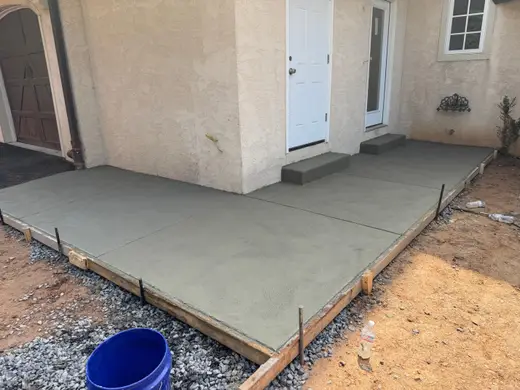
The Best Concrete Patio Finishes for Pennsylvania Homes
Six patio finishes compared on looks, traction, salt and freeze-thaw performance, upkeep, and relative cost, with recommendations by use.
Read the guide →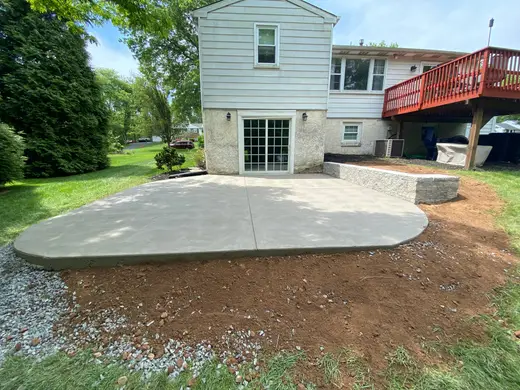
How Much Does a Concrete Patio Cost in Bucks County, PA? (2026 Guide)
Per-square-foot ranges for plain and stamped patios, the six factors that move the price, and what to have ready for an accurate estimate.
Read the guide →
Concrete Patio Installation: What to Expect From Estimate to Finished Slab
Day by day: estimate, prep, base, forms, reinforcement, pour day, finishing, curing, and how to take care of the new slab.
Read the guide →Start here
Get a free estimate for a stamped patio
Bring photos of patterns you like. Chris will measure, talk through colors and borders, and give you a written price.